Healthcare systems are under constant pressure to deliver better patient outcomes while managing rising costs and operational complexities. Many organizations are turning to proven methodologies from other industries to address these challenges. One such approach is Lean management, a philosophy that originated in manufacturing but has profound implications for healthcare.
What is Lean Management?
Lean management is a systematic approach to improving processes by eliminating waste and maximizing value. Developed by Toyota in the mid-20th century, its primary goal is to deliver more with less—less time, less effort, and fewer resources.
In healthcare, “value” is defined from the patient’s perspective. Any action or process that contributes directly to a patient’s diagnosis, treatment, and recovery is considered valuable. Anything that doesn’t is classified as “waste.” By identifying and removing these non-value-added activities, healthcare organizations can improve the quality of care, reduce costs, and enhance the patient experience.
The Core Principles of Lean in Healthcare
While Lean encompasses a wide range of tools and techniques, it is fundamentally guided by a few core principles. Let’s examine three key concepts and their application in healthcare.
1. Defining Value from the Patient’s Perspective
The first step in any Lean initiative is to clearly understand what the patient values. This requires looking at the entire patient journey, from scheduling an appointment to receiving follow-up care. Value is not what the provider or administrator thinks is important; it’s what the patient is willing to pay for or what directly improves their health outcome.
For example, a patient values a timely and accurate diagnosis, effective treatment, and clear communication from their care team. They do not value long wait times, redundant paperwork, or delays in receiving test results. By mapping out the patient journey, healthcare teams can pinpoint which steps add genuine value and which are sources of frustration or inefficiency.
2. Identifying and Eliminating Waste
Lean identifies several types of waste, often referred to as “Muda.” In a healthcare context, these can manifest in various ways:
- Defects: Medical errors, misdiagnoses, or incorrect treatments that require rework or cause patient harm.
- Overproduction: Performing unnecessary tests, procedures, or paperwork that don’t contribute to the patient’s care plan.
- Waiting: Patients waiting for appointments, test results, or a free bed. Staff waiting for equipment or information.
- Non-Utilized Talent: Failing to leverage the skills and knowledge of healthcare staff by limiting their involvement in process improvement.
- Transportation: Unnecessary movement of patients, supplies, or equipment between departments or facilities.
- Inventory: Holding excess medical supplies, medications, or forms that can expire, become obsolete, or take up valuable space.
- Motion: Unnecessary movement by staff, such as walking to find supplies, equipment, or patient charts.
- Extra-Processing: Redundant data entry, multiple handoffs, or overly complex procedures that don’t add value.
By systematically identifying and addressing these forms of waste, healthcare organizations can free up resources and focus on activities that directly benefit the patient.
3. Fostering a Culture of Continuous Improvement (Kaizen)
Lean is not a one-time project; it’s an ongoing commitment to getting better every day. This principle, known as “Kaizen,” encourages all employees—from frontline staff to senior leadership—to constantly look for opportunities to improve processes.
In a Lean healthcare environment, staff are empowered to identify problems and suggest solutions. Small, incremental changes are celebrated, and a blame-free culture is established to encourage experimentation. This bottom-up approach ensures that improvements are practical, sustainable, and driven by those who are closest to the work.
Benefits of Adopting Lean in a Healthcare Setting
Implementing Lean principles can lead to significant and measurable improvements across a healthcare organization.
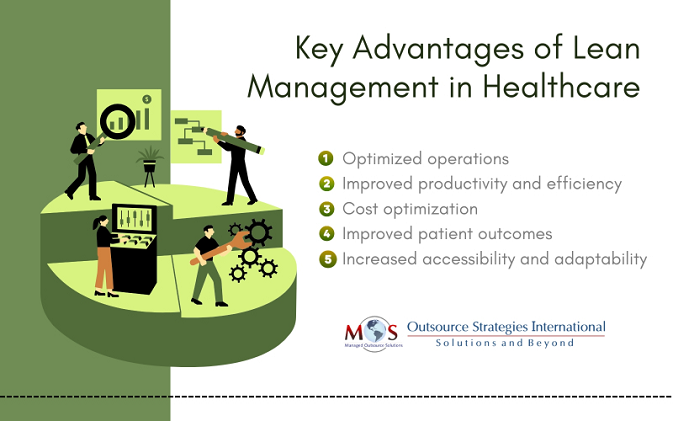
- Improved Efficiency and Productivity: By streamlining workflows and eliminating wasteful activities, staff can accomplish more in less time. This means shorter patient wait times, faster turnaround for lab results, and more efficient use of operating rooms.
- Enhanced Patient Satisfaction: A focus on the patient journey naturally leads to a better experience. When processes are smooth, communication is clear, and wait times are minimal, patients feel more respected and cared for.
- Reduced Costs: Eliminating waste directly impacts the bottom line. Reducing inventory, preventing medical errors, and optimizing staff time can lead to substantial cost savings without compromising the quality of care.
- Higher Staff Morale: Empowering employees to improve their own work processes can boost job satisfaction and engagement. When staff feel their expertise is valued and they have the tools to solve problems, they are more likely to be motivated and committed to the organization’s goals.
Challenges and Solutions for Lean Implementation
Despite the clear benefits, adopting Lean in healthcare is not without its challenges. The complexity of medical processes, hierarchical structures, and resistance to change can all pose significant barriers.
One of the primary hurdles is the initial investment of time and resources required for training and process mapping. Staff may be skeptical or feel they are too busy to participate in improvement initiatives. To overcome this, leadership must champion the Lean philosophy and clearly communicate the long-term benefits. Starting with small, manageable pilot projects can demonstrate quick wins and build momentum.
Another challenge is sustaining improvements over the long term. It’s easy for teams to revert to old habits once the initial excitement fades. This is where standardized work, visual management tools, and medical practice management software become crucial. Documenting best practices, utilizing software to streamline operations, and making performance metrics visible to everyone helps maintain focus and accountability.
Conclusion
Now that you have a better understanding of continuous improvement and its benefits, it’s time to take action. Start by identifying areas within your organization that can be improved and involve team members in the process. Remember to start small and focus on quick wins to build momentum.