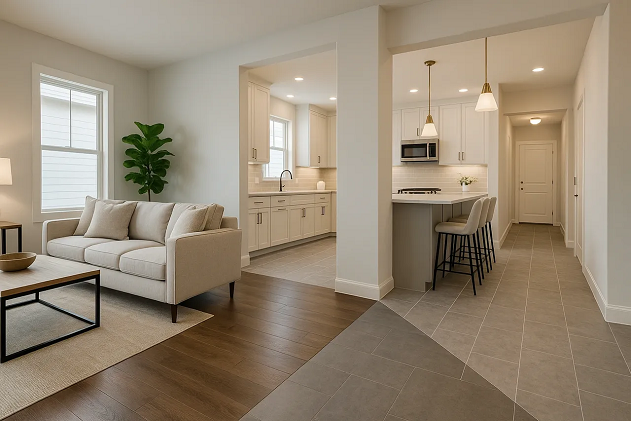
Open-concept living spaces are beautiful because they feel connected. The kitchen, dining area, and living room can all flow into one another without the visual stops that walls usually create. That openness also means one design decision carries more weight than it would in a closed-off room, and hardwood floor color is one of the biggest choices you will make.
The right color can make the entire space feel warm, calm, bright, or dramatic. The wrong color can make furniture feel disconnected, cabinets look out of place, or the room feel smaller than it really is. This is why many homeowners think beyond flooring alone and look at lighting, paint, trim, furniture, and even regular home improvement help when planning a space that feels finished, comfortable, and easy to live in.
Warm tones create comfort without closing the room in
Warm and medium hardwood tones are often the safest choice for open-concept layouts because they bring natural character without overwhelming the space. Shades with honey, chestnut, caramel, or soft brown undertones can make a large room feel more welcoming while still keeping it bright enough for everyday living.
These tones work especially well when the home has neutral walls, white or cream cabinetry, natural fabrics, or traditional furniture. They add a grounded feeling, which matters in an open layout where the space can sometimes feel too wide or undefined. A medium wood tone can help connect different zones without making the floor the loudest feature in the room.
That said, warm tones are not automatically the best choice for every home. If the space already has a lot of warm colors, such as beige walls, tan furniture, bronze fixtures, or golden lighting, a warm floor can push the room too far in one direction. The result may feel dated or overly yellow. A balanced approach usually works best, with the floor adding warmth while the walls, rugs, and furniture provide contrast.
Light hardwood keeps things open, airy, and flexible
Light hardwood flooring has become popular for open-concept homes because it makes rooms feel larger and more relaxed. Pale oak, natural maple, soft beige, and light neutral stains can brighten the space and allow furniture, artwork, cabinets, and decorative pieces to stand out without competing with the floor.
This option is especially strong for homes with limited natural light. A lighter floor reflects more light across the room, which can help the entire layout feel cleaner and more spacious. It also pairs well with many design styles, from modern and coastal to casual and transitional. If you like to update furniture or paint colors over time, a light neutral floor gives you more flexibility.
The tradeoff is that very pale floors can sometimes feel flat if the room does not have enough texture. In a wide open space, too many light surfaces can make the design feel unfinished. The key is to add layers through rugs, wood furniture, woven materials, plants, or darker accents. Light floors are not boring when the rest of the room has depth.
Dark floors bring drama, but they need the right balance
Dark hardwood floors can look striking in an open-concept living space. Deep brown, espresso, walnut, and charcoal-toned finishes can create a rich foundation that makes the room feel polished and intentional. They work especially well when paired with bright walls, large windows, lighter furniture, or bold architectural details.
A darker floor can also help define a large open space. When the walls and ceiling are light, the contrast below can make the layout feel more structured. This can be helpful in homes where the kitchen, dining area, and sitting area blend too much. In that case, a deep floor color acts almost like an anchor.
Still, dark floors come with practical considerations. They may show dust, pet hair, footprints, and small scratches more easily than medium or natural tones. This does not mean they are a bad choice, but it does mean lifestyle matters. If the home has pets, children, heavy foot traffic, or a busy routine, a very dark glossy finish may require more upkeep. A satin or matte finish can make dark flooring more forgiving, and expert guidance from premierhardwood.net can help narrow the options before making a final decision.
Medium neutrals are often the most forgiving choice
If there is one hardwood color family that tends to work in the widest range of open-concept homes, it is medium neutral. These floors are not too light, not too dark, not too warm, and not too gray. They sit comfortably in the middle, which makes them easier to pair with cabinets, wall colors, furniture, and future design updates.
Medium neutral floors also age well visually. Trend-driven stains can look exciting at first, but some colors fall out of style faster than others. Extremely gray floors, for example, had a big moment, but they can feel cold in certain spaces. Orange-heavy stains can also make a home feel older if they are not balanced carefully. A soft neutral brown tends to feel more timeless.
Another benefit is maintenance. Medium tones usually hide everyday dust and small imperfections better than very light or very dark floors. That matters in open-concept homes because the floor is visible from several angles. When one continuous surface runs through multiple areas, small marks can become easier to notice.
Think about flow before choosing a favorite shade
In an open-concept layout, floor color should not be chosen in isolation. A sample that looks beautiful on its own may not work once it is placed beside cabinets, trim, furniture, countertops, and natural light. The best color is the one that connects the whole space, not just the one that looks good in a showroom or online photo.
It helps to compare samples in the actual room at different times of day. Morning light, afternoon sun, and evening lamps can all change the way a floor color appears. A neutral brown may look warmer at night. A pale floor may look cooler in shaded areas. A dark stain may feel elegant in bright daylight but heavy after sunset.
The direction of the planks also plays a role. Long, continuous lines can make an open space feel larger and more connected. When the color and layout work together, the floor becomes a quiet design element that supports everything else in the home.
Match the color to the way you actually live
The best hardwood floor color is not only about style. It is also about daily life. A home with pets, kids, frequent guests, or a busy kitchen may need a more forgiving tone and finish. A quieter home with a carefully styled interior may be able to handle a darker or more dramatic look.
Light floors are great for openness and flexibility. Medium warm tones create comfort and timeless appeal. Dark floors add elegance and contrast when the space can handle the visual weight. Bamboo and other wood alternatives may also be worth considering when durability, sustainability, or a slightly different look matter, but the color still needs to support the overall design.
For most open-concept living spaces, the strongest choice is usually a natural medium tone or a soft light neutral. These shades offer the best mix of warmth, flexibility, and long-term appeal. The final decision should come down to your lighting, furniture, lifestyle, and the feeling you want the space to have every time you walk through the door.