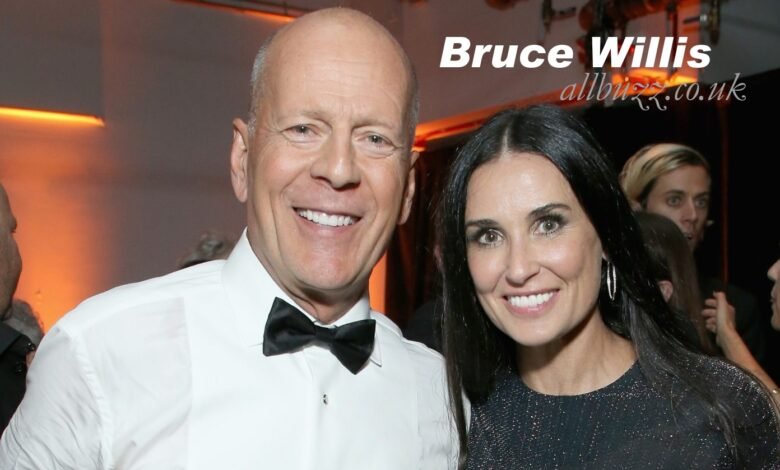
Early Life and Humble Beginnings
When people think of Bruce Willis they immediately picture the charming tough guy with quick one-liners and unshakable resolve. But before he became an international superstar, Willis had a humble beginning that feels almost like a classic underdog story. Born on March 19, 1955, in Idar-Oberstein, West Germany, Willis was the son of a U.S. soldier and a German mother. His family moved back to the United States when he was just two years old, settling in New Jersey. Unlike the polished Hollywood image many actors carefully curate, Bruce Willis grew up in a working-class family that had to hustle to make ends meet.
What makes his early life fascinating is that he wasn’t born with the smooth confidence people now associate with him. As a child, Bruce Willis had a noticeable stutter that made speaking in public extremely difficult. Rather than letting it define him, he used acting as a way to confront his fears. Performing on stage surprisingly helped him overcome his stutter, and that was the spark that ignited a love for performance. He learned early on that he could transform vulnerability into strength—a quality that would later make his characters more relatable.
Before Hollywood came knocking, Bruce Willis tried his hand at odd jobs, including working as a security guard and a bartender. In fact, his time as a bartender in New York City gave him valuable people skills, quick wit, and timing that translated perfectly to the screen. It also helped him develop that everyman persona that fans found so refreshing. Unlike many actors who seemed untouchable or overly polished, Bruce Willis felt like the guy you might actually meet in real life. This relatability became a cornerstone of his appeal.
Breakthrough with Moonlighting
Most people today know Bruce Willis as the gun-toting hero of Die Hard, but his career didn’t start with explosions and broken glass. His first major break came in the mid-1980s with the TV series Moonlighting. Paired with Cybill Shepherd, Bruce Willis played David Addison Jr., a private detective with a playful, sarcastic personality. It wasn’t just a hit show; it was a cultural moment that redefined what TV could be.
The brilliance of Bruce Willis in Moonlighting was his ability to mix comedy with genuine charm. He wasn’t trying too hard to be funny, and he wasn’t stuck in the traditional “leading man” mold. He improvised often, cracked jokes with impeccable timing, and gave off the vibe of someone who didn’t take himself too seriously. This was refreshing for audiences who were used to rigid TV scripts and predictable performances.
The show also demonstrated Bruce Willis versatility. He wasn’t just a one-note wisecracker—he could switch gears into more emotional and dramatic scenes effortlessly. This duality helped Hollywood realize that here was someone who could not only carry a show but also cross over into big-screen success. In fact, the success of Moonlighting set the stage for Bruce Willis leap into movies, something not every TV star at the time could achieve.
Redefining the Action Genre with Die Hard
If Moonlighting made Bruce Willis a household name, Die Hard turned him into a global phenomenon. Released in 1988, the film introduced audiences to John McClane, a New York cop caught in a Los Angeles skyscraper overrun by terrorists. While the premise sounded simple enough, it was Bruce Willis performance that made the film unforgettable.
Before Bruce Willis action stars were typically larger-than-life figures—muscle-bound giants like Arnold Schwarzenegger or Sylvester Stallone. They were almost superhuman, which made their victories feel inevitable. Bruce Willis on the other hand, flipped the script. He wasn’t invincible; he was vulnerable, scared, and bleeding from his bare feet. John McClane was relatable because he wasn’t perfect—he was just a regular guy trying to survive. This shift in tone redefined the entire action genre.
The film also showcased Bruce Willis ability to balance intensity with humor. McClane’s sarcastic quips while dodging bullets gave audiences a reason to root for him beyond the action sequences. Lines like “Yippee-ki-yay” became cultural catchphrases, cementing the movie in pop culture. Over time, Die Hard has been hailed not just as a great action film but as one of the greatest films ever made. And much of that credit goes to Bruce Willis, who made audiences believe that heroes didn’t have to be perfect—they just had to be human.
Expanding Beyond Action Roles
After the massive success of Die Hard, Bruce Willis could have easily stayed in his lane as Hollywood’s go-to action star. But what sets him apart is that he didn’t settle for typecasting. Instead, he actively sought roles that showcased his range. From comedy to drama, Bruce Willis proved he was more than just explosions and catchphrases.
One of his early attempts to break away from the “action star” mold was his role in In Country (1989), where he played a Vietnam veteran dealing with the trauma of war. It was a quiet, introspective role that surprised critics and audiences alike. He wasn’t flexing muscles or firing guns—he was showing vulnerability and emotional depth. This demonstrated that Bruce Willis had layers that went beyond Hollywood stereotypes.
In the following years, Bruce Willis continued to diversify. Movies like Pulp Fiction (1994) showcased his ability to blend into ensemble casts, while 12 Monkeys (1995) highlighted his talent for portraying complex, emotionally tortured characters. These choices proved that Bruce Willis was not just an action hero but a serious actor who could adapt to almost any genre. This willingness to take risks kept his career fresh and relevant long after many of his peers had faded.
Career Highlights and Memorable Performances
With a career spanning over four decades, Bruce Willis has built an impressive filmography filled with iconic roles. Beyond Die Hard, his performances in films like The Fifth Element and Armageddon solidified his reputation as someone who could lead blockbusters. He wasn’t afraid to embrace quirky, unconventional projects either, which gave him a reputation as an actor who liked to challenge himself.
One of the standout highlights of his career is The Sixth Sense (1999). Playing Dr. Malcolm Crowe, a child psychologist trying to help a boy who claims to see dead people, Bruce Willis delivered one of his most restrained and nuanced performances. His calm, steady presence anchored the film, and his performance helped elevate it from a supernatural thriller to an emotional masterpiece. The movie’s shocking twist wouldn’t have landed nearly as well without Bruce Willis grounded acting.
Even as he aged, Bruce Willis managed to keep his presence in Hollywood strong. Whether through action-packed returns like later Die Hard installments or supporting roles in indie films, he maintained a balance between blockbuster appeal and artistic credibility. This adaptability is one of the reasons why his career has lasted so long and why audiences continue to celebrate him.
Influence on Hollywood and Popular Culture
Bruce Willis isn’t just an actor; he’s a cultural icon. His portrayal of John McClane changed the way audiences viewed action heroes, and his style of mixing humor with intensity has influenced countless actors and films since. Many of today’s “everyman” action heroes—from Keanu Reeves’s John Wick to Ryan Reynolds’s wisecracking Deadpool—owe something to the blueprint Bruce Willis created.
He also helped prove that actors could transition successfully between television and film, a path that wasn’t as common in the 1980s. His success in Moonlighting and then Die Hard showed that TV stars could dominate the big screen, paving the way for others to follow. Beyond his direct influence on the industry, Bruce Willis has also become a symbol of resilience and authenticity.
Culturally, Bruce Willis catchphrases, his no-nonsense demeanor, and his grounded performances have seeped into everyday conversation. People quote him, meme him, and even debate whether Die Hard is a Christmas movie—a discussion that resurfaces every year. His work has transcended film, becoming part of the cultural fabric in a way that few actors ever achieve.
Personal Life and Challenges
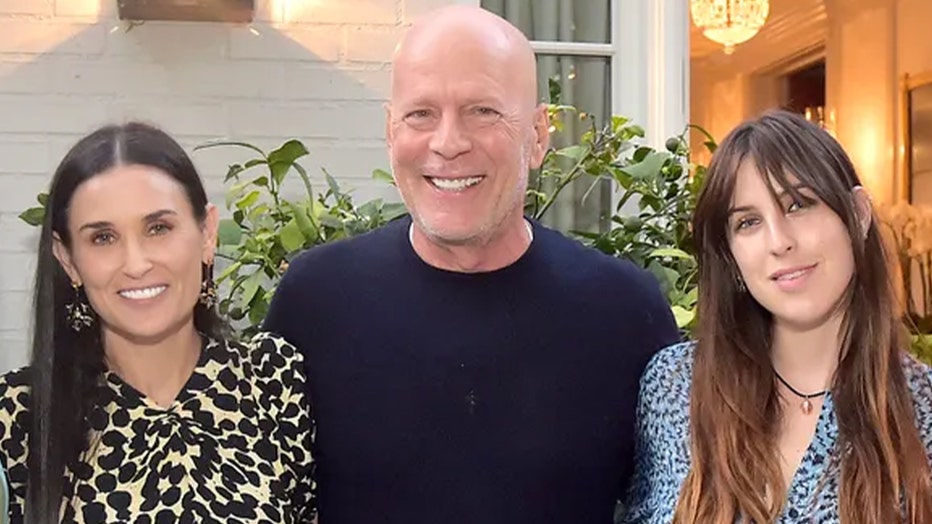
Behind the fame and spotlight, Bruce Willis personal life has been filled with highs and lows, much like his characters on screen. He married actress Demi Moore in 1987, and together they had three daughters—Rumer, Scout, and Tallulah. For years, they were considered one of Hollywood’s power couples, but the marriage ended in divorce in 2000. Despite the split, Bruce Willis and Moore remained close friends and co-parents, often praised for their mature and supportive relationship.
Bruce Willis later married model and actress Emma Heming in 2009, with whom he has two more daughters. The blended family dynamic has been surprisingly warm and drama-free, a rarity in Hollywood. Bruce Willis openness about prioritizing family and fatherhood has made him more relatable to fans who admire his down-to-earth lifestyle outside the spotlight.
In recent years, Bruce Willis has faced significant health challenges. In 2022, his family announced that he was stepping away from acting after being diagnosed with aphasia, a condition that affects speech and communication. Later, it was revealed that his diagnosis had progressed to frontotemporal dementia. While heartbreaking for fans worldwide, this news also highlighted the love and support surrounding him from his family, friends, and fans. His journey has sparked greater awareness of neurological conditions and emphasized the importance of compassion and dignity in facing health struggles.
Legacy of Bruce Willis
The legacy of Bruce Willis isn’t just about his movies—it’s about the impact he’s had on audiences and the industry as a whole. He showed the world that heroes don’t need to be perfect; they just need to keep fighting. His characters reflected the idea that resilience, humor, and humanity could be as powerful as muscles and weapons. That’s why John McClane remains one of the most beloved characters in cinematic history.
Beyond his characters, Bruce Willis career serves as a blueprint for longevity in Hollywood. He navigated the transition from television to film, avoided being pigeonholed, and took risks that paid off. He left behind not just memorable roles but also a new way of thinking about what action and drama could look like.
For fans, Bruce Willis represents more than just entertainment—he’s a reminder of perseverance, authenticity, and the idea that even the toughest heroes have a vulnerable side. His body of work will continue to inspire actors, filmmakers, and audiences for generations to come. Whether it’s a Christmas Eve rewatch of Die Hard or an emotional revisit of The Sixth Sense, his films will never lose their magic.