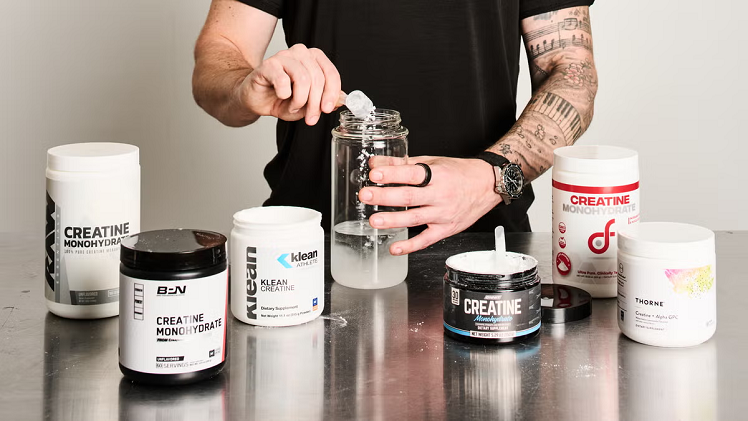
Few supplements have accumulated the volume and consistency of scientific evidence that creatine monohydrate has. Discovered in the early 19th century and studied intensively since the 1990s, creatine remains one of the most widely used and well-documented performance supplements available. For anyone engaged in resistance training, high-intensity sports, or any activity requiring repeated short bursts of maximal effort, understanding what creatine does and how to use it correctly is genuinely useful.
What Creatine Is and How It Works
Creatine is a naturally occurring compound synthesised in the body from three amino acids: arginine, glycine, and methionine. It is stored primarily in muscle tissue as phosphocreatine, where it functions as a rapidly accessible energy reserve for the ATP-PCr system, the energy pathway that powers maximal-intensity efforts lasting up to approximately ten seconds.
When you sprint, jump, or perform a maximal lifting effort, your muscles deplete ATP almost instantly. Phosphocreatine donates a phosphate group to regenerate ATP from ADP, extending the duration of peak-intensity output before the slower glycolytic and oxidative energy systems take over. Supplementing with a monohydrate creatine supplement increases the total phosphocreatine stored in muscle, meaning more fuel is available for those intense efforts and recovery between sets is faster.
Why Monohydrate Specifically
Creatine monohydrate is the form used in the overwhelming majority of research. While the supplement industry has produced numerous alternative forms, including creatine ethyl ester, Kre-Alkalyn, and creatine HCl, none of these has demonstrated consistent superiority to monohydrate in well-controlled research. Monohydrate is also the most cost-effective form by a significant margin, making claims about enhanced bioavailability in premium alternatives difficult to justify on both evidence and economic grounds.
Micronised creatine monohydrate, which has undergone additional processing to reduce particle size, dissolves more easily in liquid and is often preferred for mixability and tolerability, particularly for those who have experienced digestive discomfort with standard monohydrate.
Loading and Maintenance Dosing
Two common approaches exist for creatine supplementation. A loading protocol involves taking approximately 20 grams per day divided into four doses for five to seven days, followed by a maintenance dose of three to five grams per day. This approach saturates muscle creatine stores rapidly, producing performance benefits within the first week.
Alternatively, a straight maintenance dose of three to five grams per day without loading achieves the same saturation of muscle stores, but over approximately three to four weeks rather than one. For most people not preparing for an imminent event, the non-loading approach is entirely adequate and avoids the minor digestive effects some experience during the high-volume loading phase.
Evidence for Performance and Beyond
Meta-analyses consistently show that creatine supplementation improves performance in high-intensity, short-duration activities: strength output, sprint performance, power, and the capacity to sustain repeated high-intensity efforts. Benefits are most pronounced in exercises where the ATP-PCr system is the primary energy contributor.
More recent research has also explored creatine’s potential role in cognitive function and neurological health, with some studies suggesting positive effects on working memory and processing speed, particularly in sleep-deprived individuals and older adults. This line of research is still developing but adds an interesting dimension to a supplement that was previously viewed purely through a sports performance lens.
Frequently Asked Questions
Q: Does creatine cause water retention?
A: Creatine does cause intramuscular water retention, meaning muscle cells draw in water alongside creatine during the saturation phase. This leads to a modest increase in scale weight, typically one to two kilograms. This water is stored within muscle tissue, not subcutaneously, and does not cause visible bloating for most people.
Q: Is creatine safe for long-term use?
A: Creatine monohydrate has an excellent long-term safety profile. Studies lasting up to five years have not identified adverse effects in healthy individuals using standard doses. The frequently cited concern about kidney stress has been examined extensively and is not supported by the evidence in people with normal kidney function.
Q: Do I need to cycle creatine?
A: There is no established research basis for creatine cycling. Taking it continuously at a maintenance dose is standard practice and does not appear to reduce its effectiveness over time.
Q: When is the best time to take creatine?
A: The timing of creatine supplementation matters less than consistent daily intake. Some research supports post-workout supplementation marginally, but the difference is small. Taking it at whatever time fits your routine and ensures consistency is the most practical approach.
Q: Are there people who do not respond to creatine?
A: Approximately 20 to 30 percent of people are considered creatine non-responders, meaning they experience little to no performance benefit from supplementation. Non-response is typically associated with already-high baseline muscle creatine levels, often related to regular consumption of red meat. Non-responders are unlikely to see harm from supplementation, but also unlikely to see meaningful benefit.