A crime committed against a person is an offense against the individual, but a hate crime is an attack on an entire community. These offenses, motivated by prejudice against a group’s race, religion, sexual orientation, or other identifiers, send ripples of fear and intimidation far beyond the immediate victim.
What is a Hate Crime?
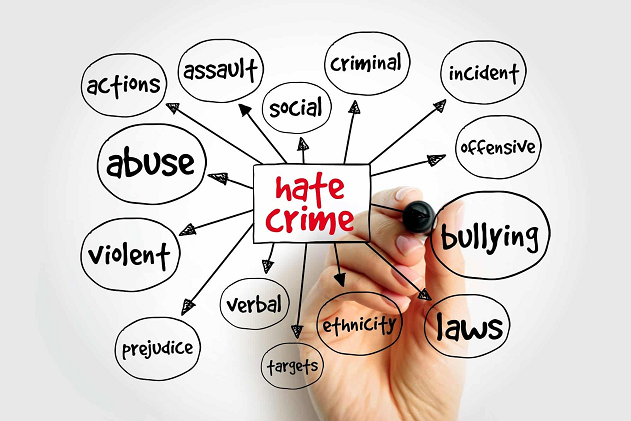
A hate crime, also known as a bias-motivated crime, is a criminal offense committed against a person or property where the perpetrator is motivated by prejudice against a protected characteristic. According to the FBI, these characteristics include race, ethnicity, ancestry, religion, sexual orientation, disability, gender, and gender identity.
It is crucial to understand that a hate crime is not a separate, distinct crime. Instead, it involves a traditional offense—like assault, vandalism, or threats—that is elevated because of the perpetrator’s biased motive. The core of the offense is the why. For example, if someone spray-paints graffiti on a garage door, it’s vandalism. If they spray-paint a swastika on the door of a synagogue, it’s a hate crime. The act is the same, but the motivation transforms its meaning and impact.
The impact of hate crimes is uniquely damaging. For the individual victim, the attack is not just personal; it’s an assault on their identity. This can lead to profound psychological trauma, including feelings of fear, isolation, and alienation. For the wider community, a hate crime sends a message that they are not safe or welcome. This can create a climate of fear, forcing people to hide their identities or live in constant anxiety.
Why Are There Enhanced Penalties for Hate Crimes?
Enhanced penalties for hate crimes, often referred to as “hate crime sentence enhancements,” are additional punishments applied to an underlying criminal conviction when bias is proven to be a motivating factor. The rationale behind these enhancements is rooted in the understanding that hate crimes cause greater harm than their non-bias-motivated counterparts.
The Rationale for Harsher Sentences
The primary reasons for implementing enhanced penalties include:
- Greater Harm: As discussed, hate crimes harm not only the direct victim but also the entire community they represent. The enhanced penalty acknowledges this broader societal impact.
- Deterrence: Harsher sentences are intended to send a clear message that society will not tolerate crimes fueled by prejudice. The goal is to deter potential offenders by demonstrating severe consequences.
- Retribution: The justice system aims to impose punishment that fits the crime. Because hate crimes are considered more egregious due to their motive, proponents argue that a more severe penalty is a just and proportionate response.
The Legal Framework
In the United States, hate crime legislation exists at both the federal and state levels. The foundational federal law is the Matthew Shepard and James Byrd Jr. Hate Crimes Prevention Act of 2009. This law expanded existing federal hate crime protections to include crimes motivated by a victim’s actual or perceived gender, sexual orientation, gender identity, or disability.
Most states also have their own hate crime statutes, though they vary significantly in scope. Some states have comprehensive laws that cover a wide range of protected characteristics and provide for significant penalty enhancements. Others have more limited laws or, in a few cases, no specific hate crime statutes at all. Legal professionals, like those criminal defense attorneys in Salt Lake City, must navigate both state and federal laws when handling these complex cases.
Challenges in Prosecuting Hate Crimes
Despite the existence of hate crime laws, successfully prosecuting these cases is incredibly difficult. Prosecutors face numerous legal and evidentiary hurdles that can prevent them from securing a conviction or applying a sentence enhancement.
Proving Motive
The biggest challenge is proving the perpetrator’s biased motive beyond a reasonable doubt. A prosecutor can’t simply point to the victim’s identity and the perpetrator’s differing identity. They must present concrete evidence that the crime was committed because of the victim’s protected characteristic. This evidence can include:
- The perpetrator’s own statements, slurs, or symbols used during the crime.
- A history of bias, such as posts on social media or membership in hate groups.
- The absence of any other apparent motive (e.g., robbery, personal dispute).
Gathering this evidence is often difficult. Perpetrators may not openly express their bias, and circumstantial evidence may not be strong enough to convince a jury.
Underreporting
Many hate crimes are never reported to the police. Victims may fear retaliation, feel ashamed, or distrust law enforcement. Language barriers and immigration status can also be significant deterrents to reporting. Without an initial report, the justice system can’t even begin to act.
Community Response and Prevention
Given the challenges of prosecution, a broader societal approach is essential to combating hate crimes. Legal penalties are a reactive measure; true prevention comes from community-led efforts.
- Education and Awareness: Schools, community organizations, and public campaigns play a vital role in educating people about the harm of prejudice and the importance of diversity and inclusion. Teaching empathy and critical thinking can help inoculate individuals against hateful ideologies.
- Support for Victims: Providing robust support services for victims of hate crimes is critical. This includes mental health counseling, legal aid, and community solidarity. When victims feel supported, they are more likely to report crimes and begin the healing process.
- Bystander Intervention: Empowering community members to safely intervene when they witness acts of bias can help stop incidents before they escalate. Training programs can teach people how to de-escalate situations or support victims.
Conclusion
Hate crimes threaten the values of a pluralistic, democratic society. While stricter legal penalties help ensure accountability and deterrence, addressing hate crimes requires collective action from law enforcement, courts, schools, community leaders, and individuals.