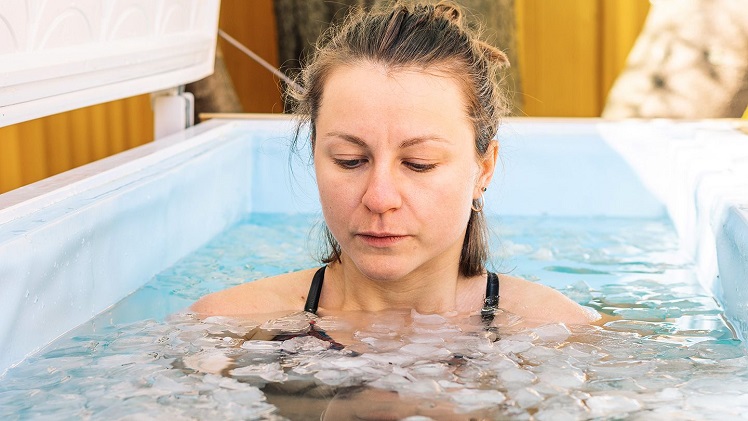
Cold plunge tubs are not hard to access for pretty much any healthy beginner, but the key is not to get straight in on day one and stay in it for several minutes. Most users of a bath begin with one minute or two minutes at a temperature of around 12-15 degrees; working your way up with durations and numbing quality over weeks. The real obstacle is not physical or mental courage; it’s knowing where your threshold is, where your body wants to breathe heavily and when cold is genuinely a bad idea.
First and foremost, the single most important fact to understand before you begin is that the cold is aimed to be a manageable stress (not a punishment). If you go too cold too quickly and stay in for too long, it won’t help as much and will leave you freezing, unhappy and less inclined to stick with it. Beginners that take it slowly will stick with it.
How cold should the water be, and for how long?
Of all the areas I’ve seen people push themselves too much, duration is probably the most common. A single attempt lasting 30 sec to 1 min is sufficient, and working up over several sessions to 23 min is a sensible goal for many.
An overall weekly dose of approximately 11 min across several sessions is a number regularly used in the research community as a rule of thumb, meaning there is really no reason to be spending long, tortured sessions.
Short and frequent beats long and infrequent. Pay more attention to the warning signs than to the clock. If your shivering ceases suddenly and you begin to feel curiously warm or sleepy, it is time to turn around, not go further.
What does a cold plunge tub cost and what are the options?
There’s a pretty broad range, and the more you want from the machine, the more you’re likely to pay. At the lower end, a cheap inflatable or plain hard shell one you fill yourself and chuck in at the top of the works with ice is somewhere around the 100400mark, which is what you’ll probably end up sampling if you’re not sure if you’ll stick with it. The problem is that the continual hassle of dealing with ice soon gets a bit monotonous.
A step-up with a separate chiller unit (which chills and often filters and circulates the water) generally costs from roughly 1,500 to over 5,000 based on construction and volume. This lets you select a temperature and stay at it, solving the primary obstacle to reliability (the water is always ready when you are). For use in the UK year-round, with summer tap water staying too warm for a satisfying submersion, a chiller can be the only thing between a consistent practice and a fleeting fad.
The materials matter for longevity. Insulated tubs hold temperature better and cost the chiller less work, while stainless steel and quality acrylic last far longer than thin plastic that degrades in sunlight. If you are buying outdoor equipment that will sit in a British garden through wet winters, build quality designed for that climate is worth paying for, and suppliers like Edenhut focus on cold water and wellness equipment suited to UK conditions rather than generic imports built for milder weather. Running costs for a chiller are modest, usually comparable to a fridge, though they climb if you are holding very low temperatures in a hot spell.
What are the actual benefits, and what does the evidence say?
Studies have associated daily exposure to cold water with increased feelings of well-being, increased alertness, and increased resilience, and a mental uplift is often cited by those who benefit from it as the most important effect. Cold water causes a dramatic surge of noradrenaline and dopamine, which is the chemical explanation of this clear-headed, near-euphoric feeling that anecdotally many experience post-plunge. The recovery and inflammation claims are less clear-cut than the advertisement makes out.
Cold does seem to lessen soreness after lifting which is why athletes have been soaking in ice baths for years but increasing evidence implies that jumping in the ice in the wake of lifting can prevent some of the gains in muscle mass. If you want to get bigger, then the best advice would be to wait four hours for an Epsom salt rubdown your muscles. If you want to recover and feel more comfortable in your own skin, then when you plunge doesn’t seem to be quite as crucial.
Who should be cautious or avoid cold plunging?
Being immersed in cold water Of course puts a fair strain on the cardiovascular system so if you suffer from any heart conditions, high blood pressure or arrhythmia you should consult your doctor first. The body initially constricts blood vessels and increases both heart rate and blood pressure for a short burst of time. Most healthy people will be unaffected but some should take care. This disclaimer is not a box to be checked off; this is the part that causes the problems in the first 30 seconds or so.
Pregnancy, Raynaud’s, and some circulatory problems are reason number two to seek medical advice first rather than try. The more mature (or older) you are and the more chronic the problem you have, the shorter and warmer you should begin with than the numbers given above, and do not jump in alone until you have been in and out a few times and know exactly how it will be.
The buddy rule is in place because the gag reflex and the disorientating shock are at their peak before you have adapted. A further easy precaution that is often overlooked, there is never any use in adding cold water therapy to drinking, and be cautious about contrast bathing straight from a warm sauna into a very frigid pool if you are a beginner, as the transition puts excess stress on your system.