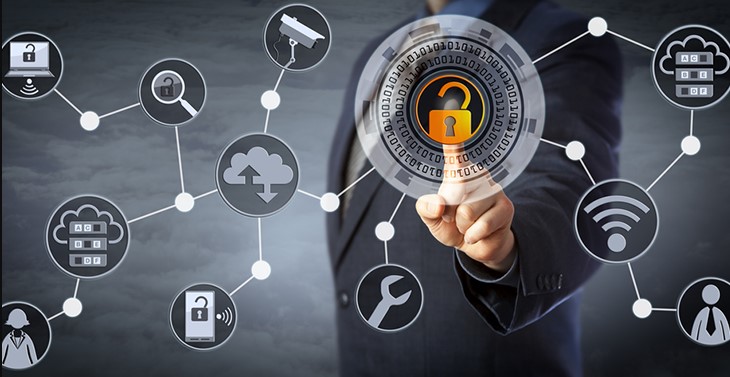
The market for remote access software has expanded considerably as distributed work has become standard across industries. With that expansion comes a wide variance in the quality, security posture, and reliability of available options. For any organization handling sensitive data, managing remote employees, or supporting customers across locations, selecting a solution without a clear security framework risks introducing vulnerabilities that can be difficult and costly to remediate later.
This guide outlines the specific security characteristics that distinguish a genuinely secure remote access solution from one that merely appears secure. Knowing what to look for enables procurement teams, IT leaders, and business owners to ask the right questions and avoid the compromises that lead to regret.
Encryption That Goes All the Way Through
The most fundamental security requirement for any remote access solution is end-to-end encryption. Every element of a remote session, the visual display stream, keyboard and mouse inputs, clipboard transfers, and any file exchanges should be encrypted from the point it leaves the user’s device to the point it arrives at the host machine, with no decryption happening at any intermediary point.
The standard to look for is AES-256 encryption for session data, combined with TLS for the transport layer. These are the benchmarks that security professionals and compliance frameworks treat as minimum baselines. A remote access solution with strong encryption protects not only the content of sessions but also the integrity of the connection itself, preventing man-in-the-middle attacks that could intercept or modify session traffic.
When evaluating a solution, go beyond the vendor’s claim that the product is “secure” or “encrypted.” Ask specifically which encryption standards are implemented, at which layer, and whether the encryption applies to all session data types, including file transfers and clipboard content. Vendors who cannot answer these questions clearly are signaling that their implementation may not be as robust as their marketing suggests.
Strong Authentication at Every Entry Point
Authentication is the gateway to every remote session, and the security of that gateway determines whether only authorized users can enter. Passwords alone are not sufficient. Credential theft is one of the most common vectors for unauthorized access, and a compromised password provides immediate and complete access if no additional verification is required.
Multi-factor authentication must be a standard requirement, not an optional add-on. The solution should support authenticator app-based codes, hardware security keys, or biometric verification as a second factor method that is meaningfully harder for an attacker to replicate than a one-time SMS code. Single sign-on integration, which allows the remote access solution to authenticate through the organization’s existing identity provider, ensures that access policies, credential management, and revocation are all handled centrally rather than in a separate silo.
The question to ask is not whether MFA is available but whether it can be enforced for all users without exception. A solution that makes MFA optional or allows administrators to bypass it for convenience is not a solution that can be called secure.
Granular Access Controls
A secure remote access solution does not give every user access to everything. The principle of least privilege, granting each user only the access they genuinely need to perform their role is a foundational security practice that reduces the potential damage from any single compromised account. The solution should support defining access at the individual user level, the group level, and, where necessary, the device level.
This means being able to specify which machines each user or group can connect to, what actions they can perform during a session, and under what circumstances access is permitted. Time-based restrictions, IP allowlisting, and device-based conditions are additional controls that meaningfully reduce the attack surface. The security controls established in NIST SP 800-53, the federal government’s authoritative security controls reference catalog, include access control as one of its foundational control families, a signal of how central this capability is to any serious security framework.
Organizations operating in regulated industries should also verify that the solution’s access control capabilities meet their specific compliance requirements. Healthcare organizations subject to HIPAA, financial services firms working within SOC 2 frameworks, and companies operating under GDPR each have distinct requirements around who can access what data, when, and under what conditions.
Session Logging, Monitoring, and Recording
Visibility into remote access activity is not optional for any organization serious about security. The solution should log every session, capturing at minimum who connected, from which device and location, which machine they accessed, when the session began and ended, and what actions were performed. This audit trail is essential for incident response, compliance reporting, and detecting patterns of misuse before they escalate.
For environments handling particularly sensitive data or subject to strict compliance obligations, session recording adds an additional layer of accountability. A video record of what occurred during each session provides forensic evidence that logs alone cannot supply. The ability to review recordings in response to a security event or audit request is a capability that transitions remote access from an operational tool into a governance-ready platform.
Monitoring tools that flag anomalous behavior sessions initiated at unusual times, connections from unfamiliar locations, or access to resources outside a user’s normal pattern extend this visibility into real-time alerting. This is particularly relevant given how quickly threat actors can move once they gain initial access to a system.
Secure Architecture and Connection Model
The underlying architecture of how a remote access solution establishes connections matters significantly for security. Solutions that require inbound firewall rules or open specific ports create an attack surface that attackers actively scan for and probe. A well-designed solution routes connections through a secure cloud gateway or relay, requiring no inbound ports to be opened on the host machine’s network.
The evolution of secure enterprise network architecture, including the transition from traditional VPN-based access toward more granular, identity-aware models, is documented in depth in the NIST enterprise network security guide, which examines the security limitations of older access approaches and the principles that underpin more modern frameworks. Understanding where a solution sits on this architectural spectrum helps organizations make decisions that will remain sound as network security practices continue to evolve.
The connection model should also ensure that data does not reside or pass through third-party infrastructure in an unencrypted form. The vendor’s data handling practices, including where connection metadata is stored, how long it is retained, and who has access to it, are all questions that belong in any serious evaluation.
Compliance Certifications and Independent Verification
A vendor’s claims about their own security are a starting point, not a conclusion. Look for third-party validation in the form of recognized compliance certifications. SOC 2 Type II certification, which requires an independent audit of security, availability, and confidentiality controls over a sustained period, is one of the most meaningful signals that a vendor’s security practices are not merely theoretical. ISO 27001 certification indicates that the vendor operates a formal information security management system.
Industry-specific certifications also matter depending on the organization’s context. Solutions used in healthcare should demonstrate HIPAA alignment. Those supporting organizations in highly regulated financial environments should be able to speak to relevant compliance mappings. Certifications alone do not guarantee security, but their absence should prompt careful scrutiny.
Evaluating the Full Picture
A genuinely secure remote access solution is not defined by any single feature. It is the combination of strong encryption, mandatory multi-factor authentication, granular access controls, comprehensive session logging, sound connection architecture, and independently verified security practices that together create a platform capable of supporting distributed work without creating unacceptable risk.
Organizations that treat security evaluation as a checklist of feature presence will miss the more important question: how these capabilities are implemented, whether they can be enforced at scale, and whether they hold up under the conditions the organization actually operates in. Thorough evaluation, including asking vendors to demonstrate security capabilities rather than simply describe them, is the standard that responsible procurement demands.
Frequently Asked Questions
What encryption standard should a secure remote access solution use?
AES-256 encryption for session data, combined with TLS for transport layer protection, is the established minimum baseline. Confirm that encryption applies to all session elements, including file transfers, clipboard content, and audio, not only the visual session stream.
Is SOC 2 Type II certification sufficient to confirm a vendor’s security?
SOC 2 Type II is a meaningful indicator because it involves independent auditing of actual security practices over time rather than a point-in-time assessment. However, it should be considered alongside other certifications, the vendor’s specific security architecture, and direct evaluation of their access control and encryption implementations.
Can a remote access solution be secure if it requires opening inbound firewall ports?
Opening inbound ports increases the attack surface and is generally considered a security risk. Solutions that require no inbound firewall changes, routing connections through outbound channels, and secure relay infrastructure offer a materially stronger security posture and should be preferred where security is a priority.