
It is so easy to feel overwhelmed by waiting to find out whether you might be pregnant, when every minor change in your body brings up new doubts. The absence of a period, sleepiness, or nausea can drive you to find answers fast, but the feeling of uncertainty can lead to confusion over the next steps to take.
Although a number of testing options are available, they are not all equally fast and accurate in results. Knowing the mechanism of each approach will enable you to make informed choices without undue stress or time wastage.
In addition, understanding the appropriate time to test can enhance accuracy and give clarity earlier. When you do it right, you will be able to shun guesswork and operate with confidence. This article will discuss the most reliable and fast tests to determine pregnancy and how to effectively use them.
1. At-Home Pregnancy Tests: Quick and Easy
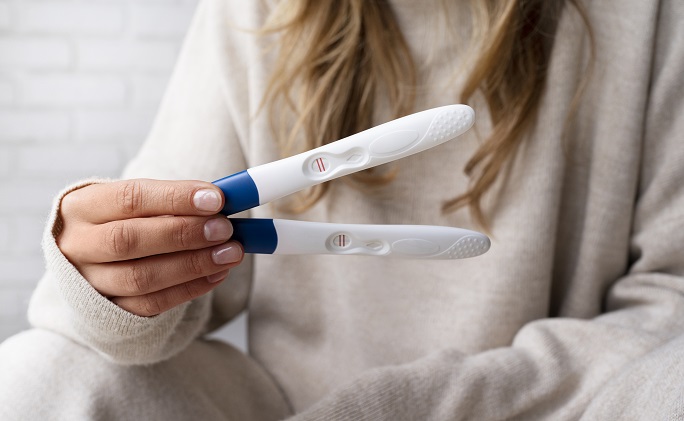
An at-home pregnancy test is one of the fastest methods to find an answer to the question “Am I pregnant?”. The tests are highly accessible, user-friendly, and provide results in a few minutes. They act by detecting human chorionic gonadotropin (hCG), a hormone released following implantation of a fertilized egg in the uterus.
Most contemporary tests are very reliable once they are taken following a missed period. Nonetheless, timing is important. Early testing can lead to a false negative since hCG levels might not be sufficiently high to be detected. Thus, to achieve the most accurate results, test in the morning when urine is more concentrated.
There are also tests that have early detection capabilities. Although they can detect pregnancy prior to a missed period, the more accurate it is, the closer you are to your expected cycle date.
2. Blood Tests: Accurate and Early Detection
A blood test is one of the most dependable methods in case you require confirmation as early as possible. Blood tests are effective in detecting lower levels of hCG, unlike urine tests, and they can be useful even before a missed period in certain cases.
There are 2 major types of blood tests, qualitative and quantitative. A qualitative test will confirm the presence of hCG, whereas a quantitative test will measure the exact quantity of the hormone. The second type may also assist in monitoring the course of early pregnancy.
Even though blood tests involve a visit to a clinic, they offer a greater degree of accuracy. Consequently, they are mostly prescribed when early confirmation is crucial or when previous results are unclear.
3. Digital Pregnancy Tests: Unambiguous and Clear Results

Digital pregnancy tests provide a simpler experience to people who like it that way. These tests have clear results, like pregnant or not pregnant, rather than interpreting faint lines.
Although the technology behind them is the same as conventional urine tests, the digital display makes them less confusing and removes guesswork. This can be particularly useful when you are testing early or when you are uncertain about reading normal test lines.
Moreover, lots of digital tests have signs that prove that they are used correctly. This additional assurance simplifies and increases the reliability of the process.
4. Early Pregnancy Symptom Tracking: A Supportive Approach
Though not a conclusive test, monitoring early pregnancy signs can aid in making your next move. The typical symptoms are missed periods, breast tenderness, fatigue, slight cramping, and nausea. These symptoms usually manifest in the first few weeks after conception.
These signs, however, may be confused with premenstrual symptoms. So, though symptom tracking increases awareness, it must always be complemented by an effective test.
Nevertheless, this approach can make you observe the changes in your cycle. The awareness of these trends may lead to a timely test and an expedited understanding.
5. Clinic-Based Urine Tests: Reliable and Quick

Clinic-based urine tests work similarly to at-home tests but are conducted in a medical setting. Because trained professionals administer them, the chances of user error are lower.
These tests are often used during routine visits and can provide quick results. In many cases, they serve as an initial confirmation before further evaluation if needed.
Additionally, being in a clinical setting allows you to ask questions and receive immediate guidance, which can be helpful when deciding next steps.
6. Ultrasound: Visual Confirmation at the Right Time
While not used for very early detection, an ultrasound provides visual confirmation of pregnancy. Typically, this method becomes effective a few weeks after a missed period, once the gestational sac is visible.
An ultrasound not only confirms pregnancy but also helps determine its location and development. This makes it an important step in early care and reassurance.
However, because it cannot detect pregnancy as early as other tests, it is usually recommended after initial confirmation.
Final Thoughts
Confirming pregnancy quickly depends on choosing the right test at the right time. At-home tests provide convenience and fast results, while blood tests offer early and precise detection. Digital options simplify interpretation, and clinic-based tests ensure accuracy with professional support.
Meanwhile, symptom tracking helps guide testing decisions, and ultrasounds provide visual confirmation later. Each method plays a specific role, and understanding these differences allows you to act with clarity.
By combining awareness with the appropriate testing approach, you can reduce uncertainty and move forward confidently. Making timely, informed decisions helps create a smoother and more reassuring experience overall.