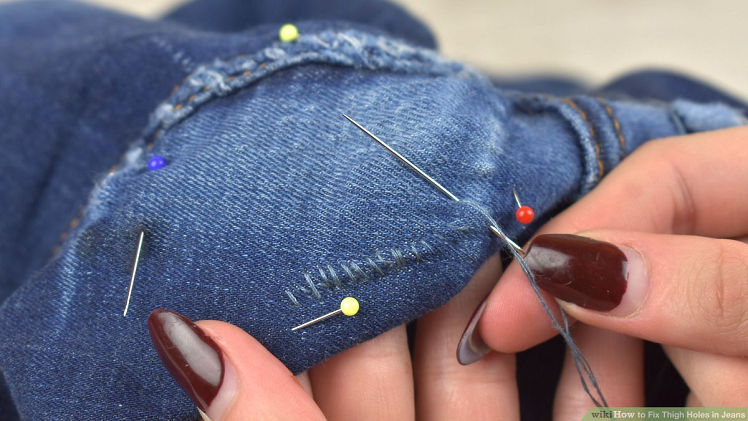
Jeans are among the toughest garments around, but even tough denim shows signs of wear. Knees with holes and thighs with thinned fabric or frayed seams are among the most common runner issues we suffer after a few wears. Hemming jeans may be an apt way to bulk them up a touch; patching them is an essentially scrappy way to get more use out of them without tossing them.
Patching jeans not only reduces waste but also saves money. Repairing denim at home requires only a few basic tools and simple techniques. Depending on your preferred patching styles, a variety of applications may provide you with invisible repairs or make the styles decorative.
Why Jeans Develop Holes and Why They Get Worn Out
Just like jeans, they also have stressed areas on the knees, inner thighs, and pockets. Frictions, time, and washing cycles will eventually weaken the fibers. High-quality denim eventually does thin and tear. Knowing why the damage occurs helps you choose the most effective method to repair it. Certain positions need to be toughened, whereas others require complete patches. Knowing the cause of damage also prevents new wear.
High-Friction Areas in Denim
Some areas of denim are already going to be getting extra movement from regular use. Knees are always bending, and thighs bump into one another while walking or sitting. Over time, these repetitive movements start to break down the fabric structure.
As time goes by, those points of stress get smaller and later turn into holes. By identifying these zones, you can apply preventive patches more quickly. These areas all benefit from reinforcement because it extends the lifespan of jeans.
Fabric Aging and Washing Effects
The more opportunities you have to wash your jeans, the more they can wear down those little blue fibers that make up the structure. This process is made even worse with harsh detergents and hot water. The more you wash, the weaker the fabric gets.
The drying method also plays a role in fabric wear. Denim threads shrink and weaken when exposed to high heat from dryers. Darker colors mask dirt, but dark fabrics tend to wear out more quickly, too.
Tools Needed to Patch Jeans
It is important to have the right tools before undertaking any rebuilding work. Most patching techniques require only basic sewing supplies. Advanced repairs may need more stuff. Good preparation means better stitching and longer-lasting results. Using high-quality materials also impacts durability.
Needles and Thread
Repairing thick fabrics also requires strong needles designed specifically for denim. Regular sewing needles can bend or break when sewing heavy Jeans. Polyester thread, preferably in a thickness that can endure tension and repeated use, works really well. Using the same colored thread allows for a neater finish. Strong stitching ensures long-lasting repairs.
Fabric Patches and Denim Pieces
Fabric patches can be bought or cut from old jeans. The bends of denim you hit with patches are basically the same color and texture as the undeformed part, so it’s a perfect product for naturally blending. Other shades can be used to obtain decorative effects.
An important consideration is that the patch size must be appropriately selected to cover the damaged area sufficiently. More than 8 but fewer than 12 patched stitches provide richer reinforcement. If placed correctly, it provides comfort and lasts a long time.
Iron and Adhesive Materials
Iron-on patches have glue on the underside that becomes tacky when heated with an iron; the heat fuses the fabric. These are fast and easy, but only for small holes or temporary repairs. For no-sew repairs, fabric glue can be a good option.
The heat ensures the patch is firmly on the denim. However, additional stitching increases durability. Mixing both types leads to more powerful results.
Types of Jeans Patching Methods
There are different ways to patch jeans, depending on the type of damage and how you would like them to look. The methods range from making fixes that go unnoticed to constructing a design element that is very much evident. The desired technique varies with skill level and use. Every method has its own benefits in terms of durability and style. Try multiple techniques to get better results.
Hand Sewing Patch Method
A hand-sewn hem repair is one of the most trusted methods for fixing jeans. You have complete control of the stitch direction and tightness. This remedy is effective for medium- to large-sized holes.
The material is reinforced by carefully stitching fabric around the edges. Use a matching thread, and the repair can be almost undetectable. Hand sewing also offers greater durability.
Machine Sewing Method
Machine sewing produces stronger, much more uniform stitches, especially in large patches or well-worn areas. Machine sewing is also faster than hand sewing, after all. The zigzag stitch is a standard one for mending denim. This balances the load evenly over the patch. This one tops the list for jeans that you wear a lot.
Iron-On Patch Method
Iron-on patches are pretty straightforward and ideal for beginners. They need just heat and pressure to adhere to denim. This approach is fast and easy for small repairs.
Yet, iron-on patches can become loose due to repetitive wash cycles. You can add stitching along the edges for better strength. Best for all temporary or light-use fixes.
No-Sew Fabric Glue Method
Fabric glue is ideal if you cannot sew. The your data and fabric layers without using needles/threads. This procedure is beneficial in case of immediate emergency restorations.
While glue-based repair is quick, it cannot compete with the durability of stitching. At the same time, this bond will weaken after a few washes. It works best for short-term fixes.
Visible Decorative Patching
Visible patching turns mending into a design element. Additional colors, patterns, or textures can be added artistically. We primarily use this styling method in the fashion world.
It doesn’t conceal the damage but draws attention to the patched zone. Ideal decorative stitching on the outer. It converts old jeans into fashion.
How to Patch Jeans Holes Step by Step
Jeans repair step-by-step tutorial. There is an important role for preparation, placement, and stitching. When you cook with a clear technique, the results will be better. Note that some hole sizes may be large enough to cause leaks. The final aspect and strength are enhanced through careful handling.
Cleaning and Preparing the Area
Before patching, wash and dry the jeans. Cleaned fabric allows you to adhere better and stitch more accurately. Elastic thread stitch: trim the surrounding loose threads of the hole. Also, flatten the damaged region to facilitate easier placement of the patch. Ironing may help smooth wrinkles. Proper preparation improves repair quality.
Cutting and Positioning the Patch
Create a patch slightly larger than the hole to cover it fully. Place it either under or above the broken area, depending on the method used. Tweak the fabric so it fits well with the denim grain. Proper positioning prevents awkward folds. Accurate placement improves durability.
Stitching or Securing the Patch
Start sewing the perimeter of your patch with quality thread. To further reinforce a stitch, keep stitches equally tight and evenly distributed. Reinforce corners for added strength. Press tightly, or glue evenly if no-sew. Give enough drying time for inserts or bonding time. Secure attachment prevents future tearing.
Fixing Knee Holes in Jeans
Because of the constant bending, you are at risk of tearing the knee area. Keeping the knees of your pants from blowing up requires firm reinforcements and stretchy stitching. Functional and decorative methods both work well. Adequate repair is crucial for comfort and maintaining mobility. The new training in this area protects against future injury.
Internal Knee Patching
They keep the outsides looking fresh, with even internal patches sewn into the jeans. Use this technique for minor repairs. Using a patch that supports thin fabric from below. It keeps an original style and makes the structure more stable. Used for standard everyday denim jeans.
External Knee Reinforcement
External patches are placed over the knee area for visible repairs. You can make them elegant by pairing them with contrasting denim or fabric designs. The technique reinforces strength and aesthetic. Sounds like something you would see in a trendier blue jean look. Reinforced knees hold up better under pressure.
Fixing Inner Thigh Jeans Wear
The skin on the inner thighs rubs together while you walk, making it prone to sagging. If this area requires repair, it must be well-reinforced. Patching here avoids full ruptures. Proper stitching reduces future damage.
Double Layer Reinforcement
A second layer of fabric on the inner thighs reinforces the soft interiors. It spreads the pressure over a broader area. It prevents fabrics from wearing out quickly. Reinforcement improves overall durability. Perfect for jeans you wear a lot.
Stretch-Compatible Repair
Choose flexible denim or stretch fabric to ensure comfort. This guarantees that mobility will not be hindered after repair. Stretchable patches mimic the natural motions of skin. It relieves pressure on the areas that are being repaired. Comfort remains consistent after fixing.
Common Mistakes When Patching Jeans
This is because most commercially available service kits contain materials that slide around. Steering clear of these errors will yield neater and sturdier results. Over time, this can become quite brittle, and as the body flexes, repairs tend not to remain sound if not done properly. A few tweaks can make all the difference.
Using Weak Thread or Fabric
Cheap materials will yield easily under any pressure. That thin thread may not be enough to hold heavy denim together. Durability and Strength: Stronger materials yield a durable, strong product. Quality supplies save from revised repairs after a while. Good materials ensure better performance.
Incorrect Patch Size
Small patches do not completely span the harbors of destruction. They will soon find that it looks bulky and painful to wear, as oversized patches have been designed. Sizing that can provide coverage while still not overwhelming your outfit. Good measurement improves fittings and lasts longer. Accuracy is important in patching.
Poor Stitching Technique
Repairs made by re-stitching can be rendered weak if the threads are laid unevenly or too loosely. Holes in the stitching cause the fabric to tear again. Consistent stitching improves reinforcement. Tight seams ensure long-lasting repairs and are considered a success.
When to Use Strong and Permanent Replacements
Poorly made patches often suffer from a lack of attention. In such cases, using high-quality materials is key to patch quality. When it comes to denim, adopting a few small techniques can make all the difference in extending the life of your favorite clothing. Consistency is key to durability. It gets professional results when following simple tips.
Reinforce High-Stress Areas
Reinforcement through stitching translates to strength. Double stitching provides additional support. This avoids ripping again in patched areas. Reinforcement increases garment lifespan. Strong repairs reduce maintenance needs.
Match Fabric Direction
Fabrics are lined up along the denim grain for greater flexibility in patches. Typically, poorly aligned fabric is simply too stiff or irritating to use. It looks better aligned correctly. It allows natural movement to denim. Direction consistency enhances quality.
Test Before Final Stitching
Position patches before permanent sewing. This is for placement and size adjustments. Testing encumbers mistakes and improves the outcome. With little tweaks, it may not actually make a difference. Planning improves results.
Creative Patch Ideas if You Want to Upcycle Those Jeans
Invisible patchwork is not the only way to go with jeans. Creative patching can transform an old pair of jeans into a fashion statement. Upcycling adds personality and uniqueness—such a sustainable style practice.
Color Contrast Patches
Using bold or solid fabric makes a statement. Spaceship Lips. This style proudly points out the areas repaired. It also converts jeans that are no longer wearable into fashion. Creative design improves visual appeal. Fashion becomes more expressive.
Embroidered Patch Designs
Embroidered names Badges utilize patches for decoration. You can sew patterns, designs, or symbols on a piece of cloth. It combines preserving it with artistry. They enable buyers to design jeans to their liking. Embroidery adds character.
Wrapping Up
How to Patch Jeans is an undeniably useful skill and a great way of prolonging the life of clothing. However, patched jeans are a way to avoid contributing so much waste. Sewing, iron-on patches, and fabric glue offer varying degrees of strength and style. The right technique will vary based on the type of damage and personal preference.
Using appropriate tools and executing a meticulous stitch-by-stitch process is of utmost importance; even tired trad jeans can be saved or turned into a trend. Patching not only fosters creativity but also promotes sustainable fashion that supports our wardrobes and the planet.
Frequently Asked Questions
How to patch jeans without sewing?
Iron-on patches and fabric glue are also good for no-sew repairs.
What fabric works best for patches?
Denim fabric is better because it makes the fabric look great and strong in every sense.
How long can patched jeans last?
Stitch it well enough, and patched jeans can last forever.
Will I be able to patch up lots of holes in jeans?
Yes, but the bigger the holes you have to make, the more powerful the reinforcement and the bigger the patches.
Which is better, hand sewing or machine sewing?
You are more precise and controlled with hand sewing, but machine sewing is stronger.
Do patches weaken jeans over time?
Well, no, well-placed patches make the weak points stronger.
Can patched jeans be washed normally?
Yes, however, gentle washing enhances the lifespan of repairs.
How do I make patches look stylish?
Employ contrasting fabrics and embroidery for transfer stitch patterns.