Why Does the Human Brain Crave the “God’s Eye” View? The Psychology of Observation Decks


There is a peculiar human behavior that defies basic survival instincts. We build glass boxes 1,000 feet in the air, pay money to stand in them, and press our faces against the transparency, staring down at the concrete abyss below.
Biologically, this makes no sense. Vertigo is a defense mechanism designed to keep us safe on the ground. Yet, in the context of the modern metropolis, we actively seek out the edge. We line up for hours to visit the summits of the world’s tallest buildings, not just to see the view, but to feel the height.
Why?
Psychologists and urban theorists suggest that the appeal of the observation deck isn’t just about sightseeing. It is about control. It is about a phenomenon known as the “God’s Eye” view—a perspective that fundamentally alters our relationship with the chaos of the city.
The Overview Effect
Astronauts often report a cognitive shift when viewing Earth from orbit, a sensation dubbed the “Overview Effect.” They describe a sudden, overwhelming sense of clarity and interconnectedness. The political borders vanish, the conflicts seem petty, and the planet appears as a fragile, unified organism.
A similar, albeit smaller, shift happens when you ascend a skyscraper.
Down on the sidewalk, the city is a sensory assault. It is loud, crowded, and unpredictable. You are a participant in the chaos, dodging taxis, navigating crowds, and reacting to stimuli. You are small.
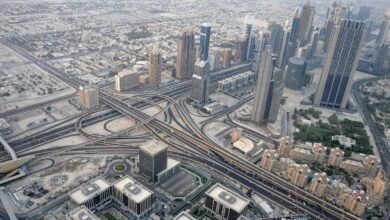
But when you rise 90 stories, the noise vanishes. The traffic becomes a silent, rhythmic stream of yellow and red lights. The chaotic grid resolves into a perfect, logical geometry. From this height, the city stops being an antagonist and becomes a map. You are no longer in the maze; you are above it. This shift from “participant” to “observer” triggers a release of anxiety. The brain, which craves pattern and order, is finally satisfied.
The Architecture of Awe
Architects understand this psychological hunger and design spaces specifically to amplify it.
In the early 20th century, observation decks were open-air platforms, gritty and windy. They were about conquering the elements. Today, the experience is curated to induce a state of “Awe”—a specific emotion defined by the perception of vastness that transcends our current frame of reference.
Modern observation decks use glass not just as a window, but as a tool to remove the barrier between the viewer and the void. By extending glass floors or cantilevering platforms out over the street, designers force a confrontation with gravity. This triggers a controlled adrenaline spike—a “safe danger.” The brain registers the threat of the fall, but the rational mind knows the glass is secure. This friction creates a unique thrill that is distinct from a roller coaster; it is a thrill of stillness and suspension.
The Vertical Mirror
Furthermore, looking down at a city is an act of introspection. When we look at the skyline, we are looking at human ambition solidified in steel and concrete.
Seeing the water towers, the rooftop gardens, the HVAC units, and the tiny figures of people creates a sense of intimacy with the infrastructure. You see the “back of house” operations that keep the city alive. You see the steam venting from buildings, the flow of the rivers, and the shadows of clouds moving across the boroughs.
This vantage point allows us to grasp the magnitude of collective human effort. A single skyscraper is an engineering marvel; a forest of them is a testament to civilization.
Conclusion
We don’t climb to the top of the city just to take a selfie. We climb to make sense of where we live.
In a world that often feels fractured and overwhelming, the view from the top offers a rare moment of coherence. It allows us to step out of the timeline of the street—the rush to the subway, the noise of the siren—and enter a timeline of stillness.
Whether it is the historic limestone canyons of Midtown or the glass giants of Hudson Yards, the skyline offers more than just a pretty picture. It offers a psychological reset. By seeking out a New York City perspective from the clouds, we are briefly granted the illusion that we understand the sprawling, beautiful, chaotic machine we call home. We look down not to feel superior, but to feel connected to the whole.