1. Who Is Johnny Somali?
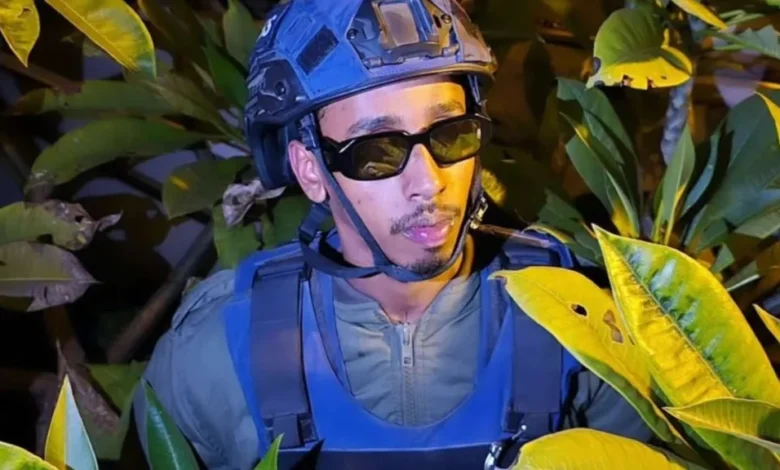
Ramsey Khalid Ismael—better known by his streaming alias, Johnny Somali—is an American internet personality born on September 26, 2000, in Phoenix, Arizona He gained notoriety over a short but dramatic period (2023–2024) for his provocative live streams, typically filmed during his travels across Asia
With a Somali father and an Ethiopian mother, Ismael has claimed that he was once a Somali child soldier—a statement that some sources treat skeptically Raised in Scottsdale, Arizona, he later graduated in May 2021 from Arizona State University with a degree in finance From this seemingly innocuous background, he transformed himself into a self-described troll and livestreamer whose attention-grabbing antics repeatedly sparked outrage in the countries he visited.
He kicked off his streaming journey around May 2023, initially live on Twitch before being banned and moving on to platforms like Kick, then later Rumble and Parti. His online following varied: by late 2024, his old YouTube channel had around 20,700 subscribers and millions of views
2. Provocations in Japan and Beyond
It was in Japan in 2023 that Johnny Somali first attracted serious legal attention—and it wasn’t for wholesome reasons. On multiple occasions, he made deeply offensive remarks related to World War II, Hiroshima, and Nagasaki—going so far as to say he would bomb Japan while on a train He trespassed in businesses, blasted loud music, and enraged locals who eventually physically confronted him. The Japanese authorities fined him approximately ¥200,000 (around US$1,400) for business obstruction
His behavior continued to spiral. He harassed a Japanese Twitch streamer, Meowko, which led to temporary bans on Kick after already losing his Twitch privileges Throughout it all, his behavior seemed designed to lure views, followers, and platform reactions—bravado masquerading as trolling.
But Japan was just the opening act. His later escapades in South Korea would ratchet up the saga to dangerous levels.
3. Escalation and Arrest in South Korea
Late 2024 marked a turning point. In Seoul, Johnny Somali engaged in multiple shocking stunts: he showed up on the subway playing North Korean speeches, disrupted buses, and even kissed the Statue of Peace—a solemn memorial honoring victims of Japanese wartime sexual slavery
These actions were offensively charged and culturally insensitive, leading South Korea to impose a travel ban preventing him from leaving the country as early as November 2024 He was arrested on several minor charges like obstruction and violations of the Minor Offences Act, pleaded guilty to those but denied more serious allegations, including creating pornographic deepfakes with a South Korean livestreamer
His court drama became more severe: he faced multiple charges, some carrying potential prison sentences totaling decades—up to 31 years under certain counts
4. Mounting Legal Troubles and Public Backlash
By mid-2025, Johnny Somali’s legal situation had intensified. On July 27, 2025, an eighth criminal charge was added, potentially exposing him to up to 12 more years behind bars The Times of India also reported that an alleged victim filed a “petition for severe punishment”, a rare and serious legal move in South Korea that could significantly elevate sentencing prospects
Other media sources suggest he could be facing as much as 46 years in prison, especially accounting for racist pranks and additional legal maneuvers At trial, he again sparked outrage by reportedly calling Korea a “U.S. vassal state” and displaying a controversial Rising Sun flag—symbols that inflamed nationalist sentiments
Amid all this, his public image has collapsed. He’s been physically attacked multiple times by locals, and his streaming platforms no longer provide a safety net: his YouTube channel was terminated, and his Kick ban became permanent
5. Cultural Flashpoint and Digital Reckoning
Johnny Somali’s saga is more than a streamer’s downfall. He’s become a case study in the ethics of content creation, trolling culture, and how digital platforms harvest outrage for monetization.
As sociologist John Lie noted in East Asia Forum, his actions shed light on how small-time provocateurs can trigger outsized reactions in countries like South Korea, where digital engagement and nationalist sentiment amplify every misstep What began as absurd stunts turned into another lesson: in today’s hyper-connected world, attention can quickly spiral into legal jeopardy.
Platforms like Kick incentivize shock content—views and monetization follow viral behavior, even if it borders on dangerous or illegal But followers don’t always translate into immunity. Johnny Somali’s legal fate—and public condemnation—demonstrates that cultural sensitivity and local laws still hold sway, even in the face of global digital chaos.
6. Final Thoughts: What Johnny Somali Teaches Us
This journey of Johnny Somali, from finance graduate to notorious streamer, is cautionary and revealing. At one level, it’s about personal accountability: crossing societal or cultural norms—even in the name of “content”—has consequences, especially when you’re abroad.
But it’s also systemic: digital platforms have monetized outrage, rewarding increasingly extreme behavior. When creators like Somali face real-world consequences—arrests, trial, and social exile—it shows the limits of trolling as a career.
Lastly, it’s cultural. His South Korean saga became emblematic of a clash between individual provocation and collective dignity. The outrage wasn’t just performative—many acted because they felt insulted at a national and historical level.
As of August 2025, Johnny Somali’s trial looms, and with petitions and multiple charges stacked up, his digital empire has crumbled. His story ends—or perhaps continues—in courtrooms and news articles, a sobering reminder that some lines, once crossed, can’t be uncrossed.